
 Español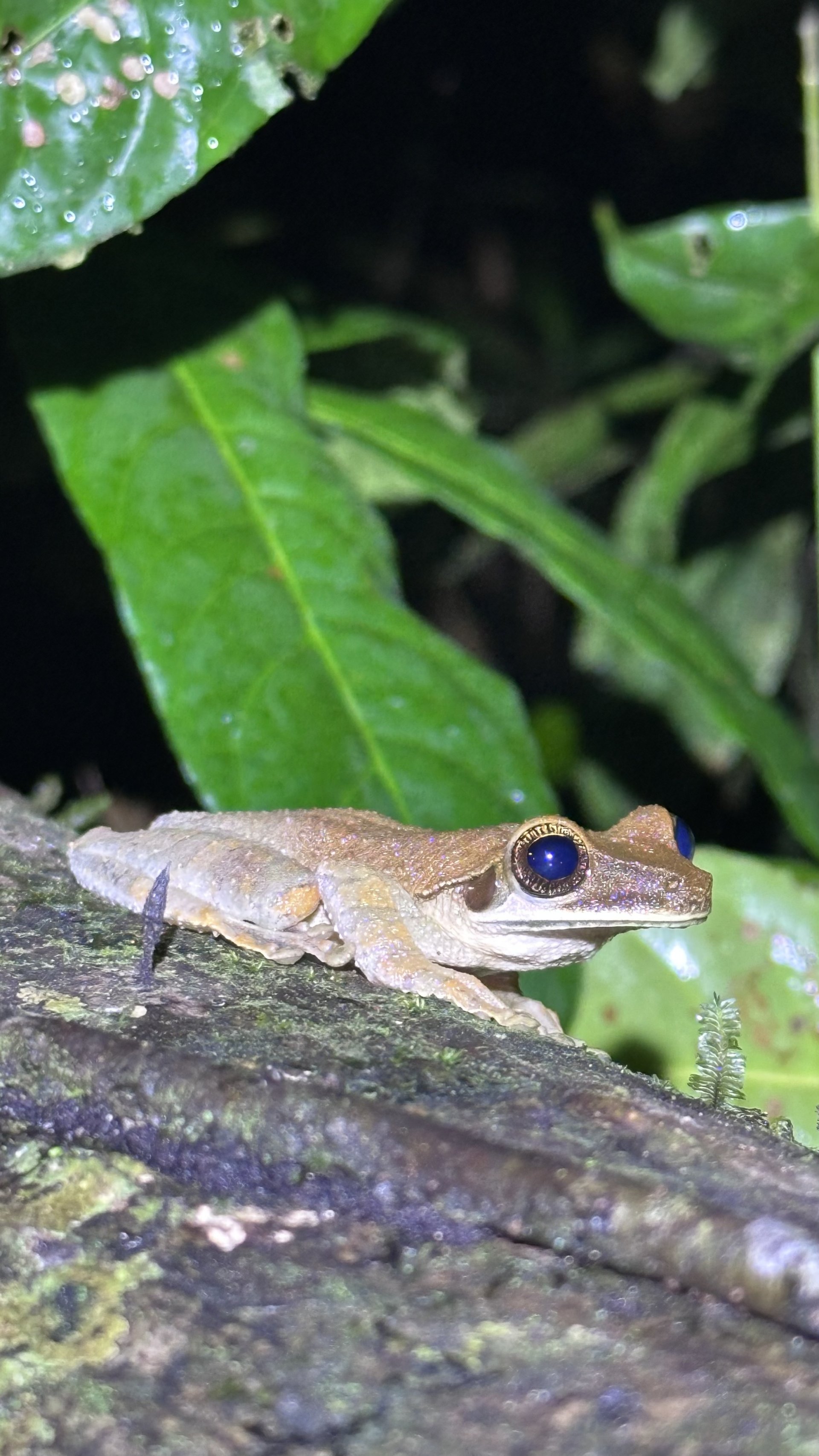
 Travel Blog Ecuador
Reptiles, Frogs & Insects of the Ecuadorian Jungle
Have you ever wondered what kind of animals can be found in the Ecuadorian Amazon?
In this blog, we will explore some of the most fascinating species hidden within the dense rainforest. But first, we need to understand more about the environment where these animals have been able to develop, adapt, and thrive as diverse species.
The Amazon enjoys a warm climate year-round, with temperatures ranging from 22°C to 30°C (72°F to 86°F) and humidity levels often exceeding 80%. These conditions create a sustainable ecosystem where reptiles and amphibians can maintain stable body temperatures and experience successful breeding seasons. In addition, the abundance of water forms rivers, lagoons, and wetlands that serve as gathering points for hundreds of species. Together, these animals form complex food chains that have driven the evolution of specialized traits such as vibrant coloration, venom, unique hunting techniques, and camouflage.
Below, we will discover some of the most remarkable species that visitors often hope to encounter during guided jungle hikes in the Cuyabeno Wildlife Reserve.
Reptiles: Survival and Hunting
One of the favorite animals among travelers is the Spectacled Caiman. This reptile is characterized by a bony ridge between its eyes that resembles a pair of glasses, giving the species its name. This feature is associated with its excellent night vision. During wildlife observation activities, these caimans can often be identified by the reflection of their eyes when illuminated by flashlights. As juveniles, they feed mainly on small fish and insects. As they grow, their prey becomes larger, and adults may feed on reptiles, aquatic birds, and medium-sized mammals such as capybaras.
One of the most feared and fascinating reptiles living in the Ecuadorian rainforest is the Green Anaconda. An adult female can weigh up to 200 kilograms (440 pounds). Its hunting strategy relies on ambushing prey while remaining submerged in the water for extended periods. This is possible because its eyes and nostrils are positioned on the top of its head, allowing it to remain almost completely hidden beneath the surface. Once it captures its prey, it uses its powerful constriction to suffocate it. Despite its enormous size and intimidating reputation, the Green Anaconda poses little threat to humans, as it generally prefers to avoid direct contact.
Frogs: The Voices of the Rainforest
Can you imagine a transparent animal? That is exactly what inhabits the small streams and creeks of the rainforest. The Glass Frog is one of the most unique amphibians in the world. As its name suggests, it has a transparent underside through which many of its internal organs can be seen. Scientists believe this adaptation helps reduce the shadows cast by its body, making it more difficult for predators to detect.
Among this extraordinary group of animals, we also find the Poison Dart Frog. This species obtains many of the toxins it uses for defense from the insects it consumes. Its bright, vibrant colors make it easy to spot and serve as a warning to predators. Historically, some indigenous cultures of the Amazon used the toxins produced by certain species on the tips of hunting darts, which inspired the common name "Poison Dart Frog."
Insects: Masters of Survival
If we look carefully at the forest floor, we may notice what appears to be a line of wandering leaves moving in perfect order. Beneath these leaves are the Leafcutter Ants, a highly organized society composed of hundreds or even thousands of individuals that divide tasks for the survival of the colony. These ants cut pieces of the rainforest's large leaves, but contrary to popular belief, they do not eat them directly. Instead, they transport the leaves to underground chambers where they cultivate a special fungus that serves as their primary food source.
Visiting the Amazon is often an adventure in trying to spot nature's camouflage experts. One of the masters of disguise is the Stick Insect. As its name suggests, its body closely resembles a thin branch or twig. Combined with its slow, cautious movements, which can even mimic the swaying motion of branches in the wind, this remarkable insect blends almost perfectly into its surroundings.
Why Is It Important to Protect These Species?
The Ecuadorian Amazon rainforest is much more than a tropical forest; it is one of the most complex and biodiverse ecosystems on Earth. Its warm temperatures, abundant rainfall, extensive networks of rivers and lagoons, and lush vegetation create the perfect conditions for reptiles, frogs, and insects to thrive while performing essential ecological functions.
Every snake that helps regulate populations of small animals, every frog that contributes to controlling insect populations, and every insect that pollinates plants or recycles nutrients plays a role in maintaining the delicate balance of the rainforest. Although many of these species often go unnoticed compared to more iconic wildlife, their contribution is fundamental to the health, resilience, and long-term survival of the Amazon ecosystem.
Would you like to discover these incredible species in their natural habitat?
The Ecuadorian Amazon awaits you with unparalleled biodiversity, guided jungle hikes, night excursions, and the opportunity to observe some of the most fascinating animals on Earth. Experience an unforgettable adventure in the heart of the rainforest, where every trail reveals a new story of survival and adaptation.
Book your Amazon adventure today and uncover the secrets of Cuyabeno with our expert naturalist guides.
Our administrative team and naturalist tour guides speak English & Español for your convenience.
Contact us with a message or phone call via WhatsApp at +593995433293 if you have any questions.
Or send us an email at lodgecuyabeno@gmail.com
Looking for even more adventure in Ecuador? Visit our parent company, GeoTours for various options across the country and in the adventure gateway of Ecuador in Baños de Agua Santa, Ecuador.
Discover the most fascinating reptiles, frogs, and insects of the Ecuadorian Amazon. Learn how species such as the green anaconda, spectacled caiman, glass frogs, and leafcutter ants thrive in one of the world's most biodiverse ecosystems.
Green Forest Ecolodge | Cuyabeno Ecuador


